Data Exchange Icons for Local Business Branding
A First Glance at Data Exchange Icons
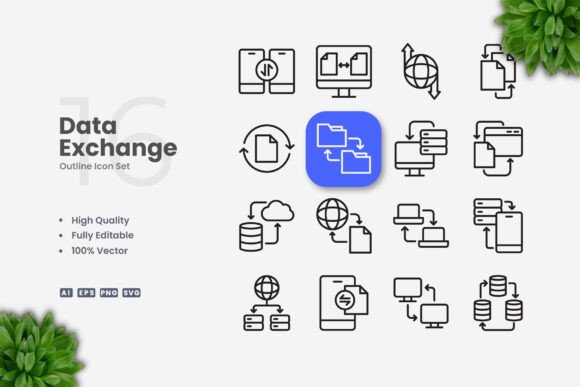
At first glance, Data Exchange Icons feel like a breath of fresh air in the world of graphic design. The simple and clean icon design immediately suggests a modern, versatile approach to visual storytelling. These icons carry a subtle elegance that makes them suitable for a wide range of industries, from food businesses to handmade product lines. Their minimalistic nature hints at a brand personality that is professional yet approachable—ideal for small business owners who want to project reliability without feeling overly formal.
The mood they create leans toward contemporary and functional, which means they can easily adapt to both digital and print formats. Whether you're designing a logo or creating packaging for your boutique store, these icons offer a sense of clarity and purpose. They are not over-the-top or flashy, but they do have an understated charm that speaks volumes about quality and attention to detail.
Real-World Application: A Bakery’s Branding Journey
Imagine working with a local bakery that wants to refresh its brand identity. As a designer, I often start by looking for assets that can unify various touchpoints. Data Exchange Icons become a natural fit when designing product labels, social media graphics, and promotional flyers. For instance, using an icon representing “fresh” or “flour” on a bag of flour instantly communicates the product's essence without needing words.
These icons can also be used creatively in menu designs, where visual cues help customers navigate through options quickly. When paired with a handwritten font on a thank-you card or a decorative label, they add just the right amount of visual interest without overshadowing the message.
In this scenario, the icons helped strengthen the bakery's brand identity by providing a consistent visual language across all marketing materials. This consistency builds stronger customer trust and improves shelf appeal, especially in competitive markets like bakeries and cafes.
Where Data Exchange Icons Shine Brightest
Data Exchange Icons work exceptionally well in situations where clarity and simplicity are key. Here are some specific applications:
- Product Labels: Use them as accents on product packaging to highlight features or ingredients.
- Promotional Banners: Add visual interest to banners without cluttering the message.
- Social Media Campaigns: Incorporate them into posts to reinforce brand messaging and improve engagement.
- Seasonal Packaging: Create festive visuals for holiday campaigns or special events.
- Boutique Visuals: Use them as decorative elements on hang tags or printable inserts.
They are also great for enhancing product mockups and printable design templates, especially for those who need quick turnaround times or are working within tight budgets.
Areas to Approach with Caution
While Data Exchange Icons are incredibly useful, there are scenarios where their use should be carefully considered. For example, they may not be the best choice for formal corporate branding or luxury minimalist brands, where subtlety is expected but the icons might appear too playful.
Additionally, avoid placing them on very small labels or ingredient-heavy layouts, where they could become distracting rather than informative. In areas with low-contrast backgrounds, ensure they remain visible and legible.
When using them in digital product or web design, test them alongside different fonts such as serif, sans serif, script, and display fonts to ensure they complement the overall design aesthetic.
Practical Notes for Designers and Brand Owners
Before committing to Data Exchange Icons for a client project, it’s essential to test them in real-world conditions. Here are some practical steps:
- Test on Real Packaging Mockups: See how they look on actual product labels or boxes before finalizing the design.
- Check Black and White Usage: Ensure they still convey the intended message without color.
- Preview on Small Labels: Confirm they remain readable at smaller sizes.
- Test with Brand Colors: Make sure they blend well with the brand’s existing palette.
- Confirm Commercial Licensing: Always verify that you have the proper rights to use the asset for client work or physical product sales.
Also, consider the file format. If you’re planning to use them in SVG design or PNG design, check for transparency and vector editability. This ensures flexibility in resizing or modifying the icons as needed.
Final Thoughts: Elevating Brand Presentation with Data Exchange Icons
Data Exchange Icons offer a valuable addition to any small business’s design toolkit. From brand identity development to packaging design, these icons help create a more polished and professional image. They support clearer visual hierarchy, stronger first impressions, and improved customer trust.
Whether you're running a handmade business, a local bakery, or a small boutique, integrating these icons into your brand visuals can make a significant difference. They provide the perfect balance between function and aesthetics, making them a must-have for any creative marketplace or Canva template collection.
With careful consideration and thoughtful application, Data Exchange Icons can transform your marketing visuals and editorial design into something truly memorable for your audience.